
the land & infrastructure
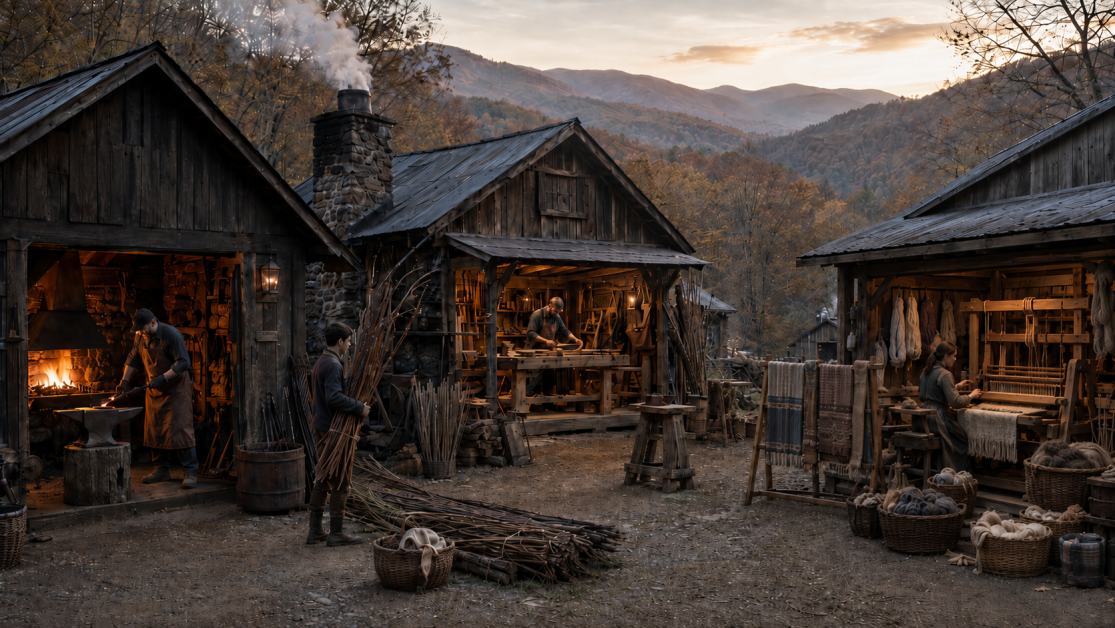
Appalachian hillside, shaped into a refuge that can stand on its own feet.
Arcadia is not an idea floating in the future, it is a way of living, eventually to be brought to a specific piece of ground somewhere in West Virginia, waiting for us to step up and steward it to health and sustainability, with a clear plan for water, power, shelter, food, and access.
This page is a walk across that land in words, from the high Grove to the Stillwater lowlands, with the bones of the earth laid bare.
The five living zones
These zones are not separate worlds, they are parts of one body, each with its own work.
-
The high, quiet spaces under old trees where we hold council, rites, and story nights. Fire circle, benches, simple altars, places for stillness and oath taking.
-
The central cluster that holds the daily life of Arcadia. Here you find the Hearth lodge, kitchen, workshops, storage barns, tool yards, guest cabins, and the power core. This is where people cook, gather, repair, teach, and plan.
-
The working acres that feed the tribe. Vegetable gardens, terraces, small orchards, berry hedges, herb beds, pastures, mushroom logs, small livestock. Fenced and planned so that soil improves each year instead of wearing out.
-
The working acres that feed the tribe. Vegetable gardens, terraces, small orchards, berry hedges, herb beds, pastures, mushroom logs, small livestock. Fenced and planned so that soil improves each year instead of wearing out.
-
The wetland and low lying ground. A place for water storage, wildlife, cattails and willows, amphibians and birds. Managed like a living organ of the land, not a nuisance to be drained.
Water and earthworks
The first duty of a place like this is to secure water and keep the ground stable.
Primary water
Develop a reliable source, well or spring, tested for quality
Storage tanks sized to carry the community through dry spells
Gravity and low energy pumps favored, with solar support rather than fragile, high tech dependencies
Surface water and drainage
Swales and terraces on slopes to slow runoff and soak rain into the soil
Check dams and simple earthworks where water wants to cut gullies
Paths and roads placed so they do not become rivers in a storm
The Stillwaters
Wetland protected, not filled in
Planted with deep rooted, native species to hold soil and filter water
Designed as a natural overflow and sponge in heavy rains, and a reserve of life and forage in dry periods
Water security here is not a single machine, it is a pattern of dozens of small, layered decisions.
Power, Heat, and Sanitation
Arcadia’s infrastructure is designed to run when larger systems falter.
Power
Solar photovoltaic array sized first for essentials, then scaled as needed
Battery bank protected from weather and physical harm
Wiring laid out with maintenance in mind so that a skilled resident can repair it without exotic parts
Low draw systems chosen wherever possible, from lights to tools
Heat and cooking
Wood heat as the backbone, fed by sustainably managed forest and coppice
High efficiency stoves or rocket mass heaters for primary indoor warmth
A mix of wood, solar, and gas as appropriate for cooking, to keep options open
Sanitation and greywater
Composting toilets or carefully designed septic, depending on final siting and code
Greywater gardens that turn sink and shower water into nourishment for trees and shrubs
Stormwater directed away from foundations and paths, toward swales and plantings
You should be able to walk through the Hearthhold, see how everything works, and understand it with your own eyes, not just through a manual.
Shelter & shared spaced
Arcadia does not need showpieces, it needs strong, honest buildings that can be repaired by the people who live in them.
The Hearth lodge
Central gathering and living space
Simple, durable construction using local timber and stone where possible
Passive solar orientation, good roof, deep overhangs, and insulation chosen for longevity
Built in stages, first as a weather tight shell, then finished inside as capacity grows
Workshops and barns
Covered work area for tools, repairs, and fabrication
Storage for seed, feed, lumber, hardware, and archives
Barns sized for small livestock and equipment, ventilated and easy to clean
Guest and transition cabins
Modest, efficient cabins for visitors, apprentices, and new arrivals
Spread near the Hearthhold for safety and shared utilities, not scattered in the Wilds
Outdoor infrastructure
Simple, well drained gathering areas with fire rings and seating
Drying racks, smokehouse, or outdoor kitchen elements as the food systems mature
Every structure is judged by three questions:
Does it serve the land? Does it serve the people? Can we maintain it ourselves?
Roads, paths & layout
Arcadia does not need showpieces, it needs strong, honest buildings that can be repaired by the people who live in them.
The Hearth lodge
Central gathering and living space
Simple, durable construction using local timber and stone where possible
Passive solar orientation, good roof, deep overhangs, and insulation chosen for longevity
Built in stages, first as a weather tight shell, then finished inside as capacity grows
Workshops and barns
Covered work area for tools, repairs, and fabrication
Storage for seed, feed, lumber, hardware, and archives
Barns sized for small livestock and equipment, ventilated and easy to clean
Guest and transition cabins
Modest, efficient cabins for visitors, apprentices, and new arrivals
Spread near the Hearthhold for safety and shared utilities, not scattered in the Wilds
Outdoor infrastructure
Simple, well drained gathering areas with fire rings and seating
Drying racks, smokehouse, or outdoor kitchen elements as the food systems mature
Every structure is judged by three questions:
Does it serve the land? Does it serve the people? Can we maintain it ourselves?
phased buildout of arcadia
From raw ground to enduring refuge. The land is already chosen. The work unfolds in three overlapping phases.
Phase One: Establishment (roughly years 0 to 3)
Secure primary water and basic storage
Cut and stabilize access road and main paths
Install first solar array and battery core
Raise Hearth lodge, phase one, and at least one workshop
Fence and plant initial Fieldworks, with a focus on soil building rather than maximum yield
Phase Two: Longevity (roughly years 3 to 10)
Expand gardens, orchards, and pastures in the Fieldworks
Finish Hearth lodge interior and guest cabins
Add redundancy to power and water systems
Build out barns, apothecary, and dedicated teaching spaces
Complete key earthworks and wetland restoration in the Stillwaters
Phase Three: Sustenance (year 10 onward)
Shift focus from building to maintaining and refining
Strengthen stores, seed banks, archives, and contingency plans
Allow more of the Wilds to reforest and mature
Deepen ties with allied homesteads and regional networks
At every stage, the question is the same. Is this choice making Arcadia more able to stand on its own, and more able to serve others when storms come.
walk further into the vision
From blueprints to people
Land and infrastructure are the bones of Arcadia. The Accord and the culture are its heart. The two must grow together.
If you want to see how this Arcadia will be lived in, not just how it will be built, you can go deeper from here:
A stronghold is just land and lumber until people with a shared vow inhabit it. This is the ground that vow will stand on.